Recognized September 6, 2026
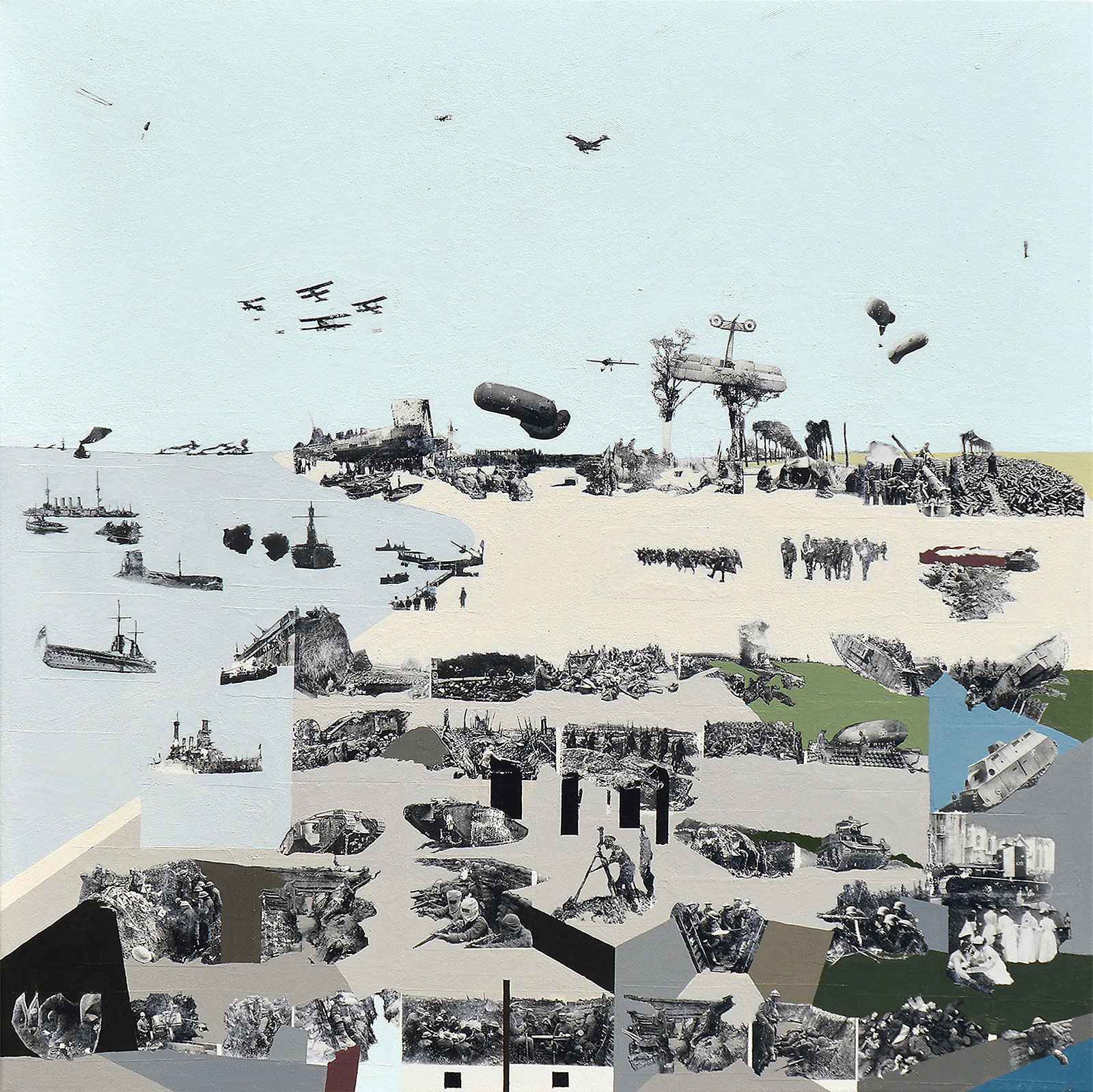
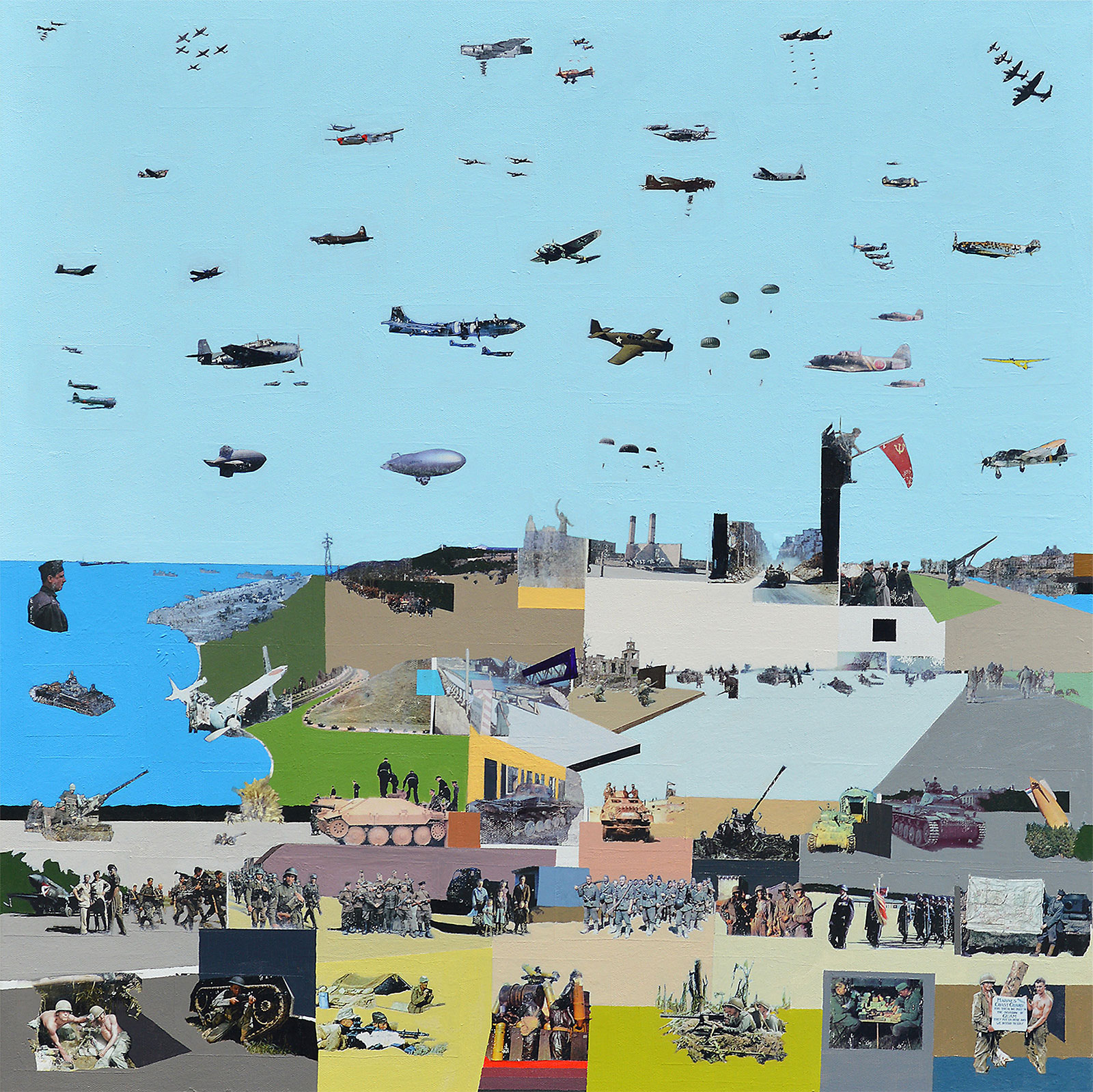
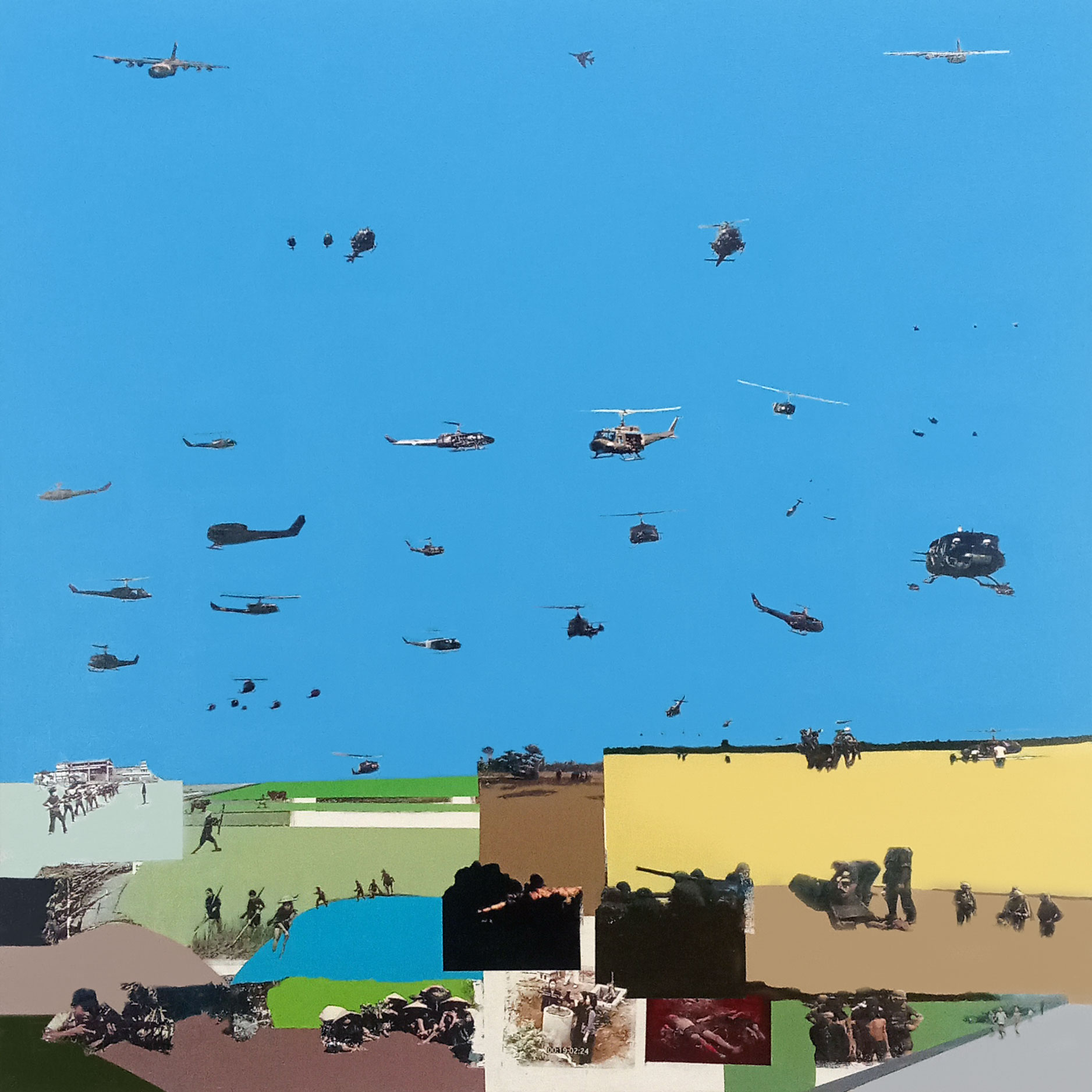
Camera-awareness chain across the triptych: World War One's raw documentary photography teaches a generation to see itself historically. World War Two's subjects perform for that awareness (soldiers staging themselves for the camera, propagandists exploiting the same awareness to manufacture a moral narrative WWI never received). Vietnam's subjects are again not looking at the camera, but this is not a return to WWI's innocence — it is unawareness of a different mechanism (live, uncensored broadcast exposure) rather than unawareness that the camera would matter at all. Recognition, not present during painting.
Related works
Confirmed across 1 session
Originating session
Artwork — Art/Official session, September 9, 2026Cataloguing pass — 0 fields confirmed
Also from this session
- Throughline: The trust-economy across WWI, WWII, and Vietnam: WWII's manufactured 'good vs evil' narrative (built through propaganda apparatus on both sides, exemplified by the staged Khaldei Reichstag photograph) functions as capitalized moral credit for the US/West. Vietnam spends that credit down with a lag rather than starting from zero — the backfire of raw, uncensored Vietnam War footage was delayed by the size of the reserve built in the 1940s, and further diffused by the war spanning multiple US presidents rather than attaching to a single confirmed figure the way WWII attached to Hitler. The credit was badly dented (My Lai, the Pentagon Papers) but not exhausted, which is why the US was not rewritten as history's villain the way Nazi Germany was.…
- Throughline: The Korea-gap: Korea (1950-53) is entirely absent from the Mediums of War project, chronologically sitting between WWII and Vietnam. Identified as technologically caused rather than thematically excluded: Korea falls in the gap between the recording media the project actually traces (still photography, color photography, 16mm sync-sound film) — the lightweight sync-sound cameras and broadcast infrastructure that defined Vietnam's media relationship weren't in place until deep into the 1960s. May be part of why Korea reads culturally as 'the forgotten war' more broadly, not just within this project.…
- Throughline: Anachronism leaking across the medium-per-era scaffolding: The medium-per-era logic (b&w for WWI, color for WWII, film for Vietnam) is never as clean as the triptych's own scaffolding implies. Two WWII tanks appear as accidental anachronisms within the World War One painting (anachronism forward). At least four source images used in World War Two are modern digital colorizations of black-and-white originals rather than period color (anachronism backward) — undercutting the premise that color is WWII's native recording medium. Both read as the same underlying leak from opposite temporal directions.…
- Throughline: Sourcing method as the mechanism enabling genuine discovery: Both World War One and World War Two began as tests (compositional test toward a larger format for WWI; a 'can I make this work with a bunch of photos' test for the sourcing method itself), with fast, near-random source selection rather than researched curation. This randomness is identified as the mechanism that makes the retrospective readings surfaced during cataloguing (Allied/German color-technology skew, named-vs-anonymous framing, cross-painting anachronism leaks) genuine discoveries rather than confirmations of an argument already quietly built in through deliberate curation — protecting the 'recognition not influence' principle at the sourcing level, not just the compositional level.…